
The Snake: A Mirror of Transformation
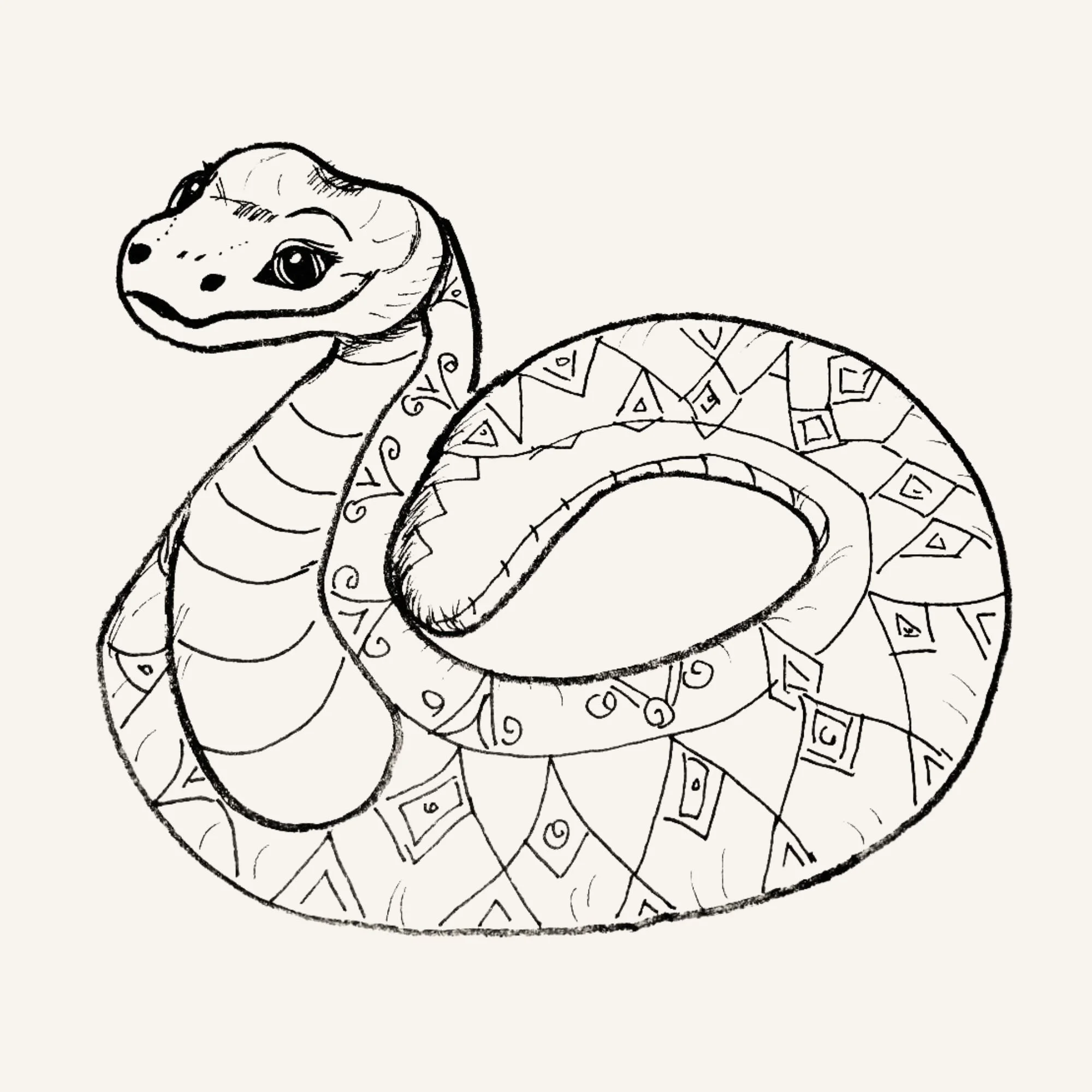
For many years, I thought the yellow snake from my childhood dream represented fear. I didn't want to remember the dream or understand what it meant. It stayed hidden somewhere in my memory until many years later, when I began researching the symbolism of the snake across different cultures.
What surprised me most wasn't how different those cultures were, but how similar their beliefs had become. Again and again, I found the snake associated with transformation, wisdom, healing, fertility, creativity, and renewal. Instead of seeing the snake as something to fear, they saw it as a guide through life's constant changes.
That discovery completely changed the way I understood my own dream. I no longer asked why the snake had frightened me as a child. Instead, I began asking what it had been trying to teach me all along.
Mesoamerican Cultures
(Mexico and Central America) This may be where the snake holds the greatest importance.
Quetzalcóatl (The Feathered Serpent): For the Aztecs and Toltecs, he was the god of wisdom, light, and wind — not a creature that crawls, but a divine being connecting earth and sky.
Kukulcán: The Mayan version of Quetzalcóatl. At Chichén Itzá, the play of light and shadow during the equinox creates the illusion of a serpent descending the pyramid.
Ancient Egypt
Wadjet (The Cobra): Depicted on the pharaohs' foreheads (the Uraeus). It was a symbol of protection and sovereignty, believed to spit fire at the king's enemies.
Mehen: A benevolent serpent who protected the sun god Ra during his nightly journey.
Greek Culture
The Rod of Asclepius: The snake was associated with healing because It sheds her skin (rebirth). It remains the worldwide symbol of medicine today.
The Oracle of Delphi: Originally guarded by the serpent Python, representing the deep knowledge of the earth.
India and Hinduism
Nagas: Semi-divine serpent beings, venerated as guardians of treasures and water sources.
Kundalini: In yoga, described as a serpent coiled at the base of the spine, representing the spiritual energy meant to awaken.
Ananta Shesha: The giant serpent upon which the god Vishnu rests in the cosmic ocean.
West African Cultures
Damballa (Benin and Haiti): In the Fon religion, and later in Vodou, he is the Great Master, the Creator who used his 7,000 coils to shape the stars and the earth. He's seen as a benevolent father figure.
Aboriginal Australian Cultures
The Rainbow Serpent: One of the oldest deities in the world. It is the creator of mountains, rivers, and life itself, controlling water and rain.
Norse Culture
Jörmungandr: The world serpent that encircles the earth. Though a figure of chaos, he is essential to the balance of the cosmos until Ragnarö
A Mirror of Transformation
The more I learned about the snake, the more I understood why she had stayed with me for so many years.
Across cultures, she represents transformation, healing, wisdom, and the courage to leave behind what no longer serves us. Looking back, I realize that my own life has been shaped by those same cycles. Leaving my country, learning a new language, starting over, changing careers, and eventually creating Animal Mirror all required me to let go of an old version of myself so another one could emerge.
Perhaps that is why the snake appeared so early in my life.
Not to frighten me, but to remind me that transformation is rarely comfortable. Like shedding old skin, it can feel slow, uncertain, and even painful. Yet without it, we cannot continue to grow.
Today, I no longer see the yellow snake from my childhood dream with fear. I see her as one of the first animal guides that quietly accompanied my journey, long before I understood the meaning she carried.
Continue the Journey
The Yellow Snake
The childhood dream that stayed with me for years, long before I understood what the snake was trying to teach me.
The Snake Sheds Its Skin
Years later, the snake returned in an unexpected way, becoming a symbol of healing, transformation, and the birth of Alma Animal Art.
